
India’s online retail ecosystem continues to expand as more consumers discover, compare and purchase products digitally. As demand for every Ecommerce Website continues to rise, IBEF projects that India’s ecommerce market could reach approximately US$326.7 billion by 2029, demonstrating the growing opportunities available to businesses investing in digital commerce.
However, launching an online store requires much more than selecting a template and uploading products. Your ecommerce website must attract visitors, provide a smooth shopping experience, process payments securely and convert traffic into revenue. Choosing the right ecommerce website development company in India can therefore determine whether your online store becomes a scalable business asset or an expensive digital catalogue.
Begin With Your Business Vision, Not Just a Website Brief
Before contacting an ecommerce development company, clearly define what you expect your online store to accomplish. Consider your target customers, product categories, expected order volume, geographical markets, preferred payment methods and future expansion plans. A clearly documented vision helps the development team recommend the correct platform, features and ecommerce architecture.
A professional ecommerce website development company in India will take time to understand your business model before discussing designs or pricing. The requirements of a direct-to-consumer brand will differ from those of a wholesaler, manufacturer, multi-vendor marketplace or subscription-based business. Your development partner should understand these differences and translate them into practical website functionality.
Look for a company that offers ecommerce consulting, business analysis, website development services and long-term growth planning. The team should be interested in your customer acquisition strategy, average order value, fulfilment process and operational challenges. This strategic approach creates a stronger foundation for custom ecommerce development and reduces the need for expensive changes after launch.
Look Beyond Promises and Examine the Portfolio

An attractive agency presentation does not guarantee strong development capabilities. Review the company’s completed ecommerce projects and evaluate the quality of its product pages, category navigation, mobile experience, checkout process, search functionality and overall design consistency. A credible portfolio should show both visual creativity and technical competence.
Industry experience can also make a significant difference. An agency that has worked with fashion, healthcare, electronics, food, education, manufacturing or B2B companies may already understand common customer expectations and operational requirements. This knowledge can help the agency create more relevant ecommerce UI/UX design, product filtering systems and conversion journeys.
Ask for relevant case studies that explain the client’s problem, the solution implemented and the measurable outcome. Strong case studies may cover improvements in website speed, organic visibility, enquiries, conversion rates or online revenue. This evidence allows you to judge whether the company can deliver conversion-focused website development rather than simply producing visually attractive pages.
Choose a Technology Stack That Can Grow With You
Your ecommerce platform should match your current requirements without restricting future growth. A smaller catalogue may work efficiently with Shopify development or WooCommerce development, while complex businesses may require Magento development, a custom framework or a headless ecommerce development solution. The agency should explain each platform’s advantages, limitations and long-term costs.
Avoid companies that recommend the same platform to every client. The right technology depends on your catalogue size, product variations, inventory structure, integration requirements, internal team and expected traffic. A dependable ecommerce development agency will compare different solutions and recommend a platform based on business suitability rather than development convenience.
The selected architecture should also support future expansion into multilingual stores, multiple currencies, mobile applications, international markets, marketplaces and omnichannel selling. Modern ecommerce platforms need to remain dependable, flexible, secure and scalable as order volumes and customer expectations increase. Choosing a company experienced in scalable ecommerce development can prevent costly migrations later.
Make Customer Experience the Centre of Development
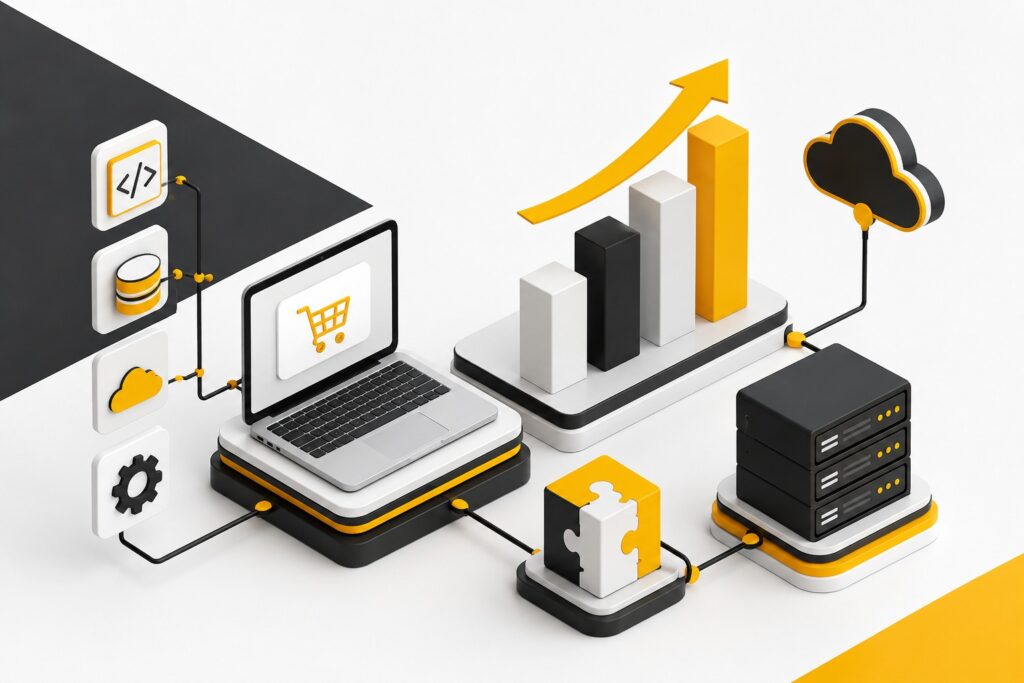
Customers should be able to discover products, understand their benefits and complete purchases without confusion. Effective ecommerce UI/UX design services focus on intuitive navigation, readable content, clear product categories, prominent calls to action and a frictionless checkout process. Every element should help the customer move closer to purchasing.
Mobile usability deserves particular attention because customers may browse, compare and purchase products from different screen sizes and internet conditions. The development company should create a responsive interface with touch-friendly buttons, optimised images, simple menus and easily accessible payment options. A mobile-first experience can also support your broader mobile commerce development strategy.
Ask whether the company conducts user journey planning, wireframing, prototype testing and checkout optimisation before development begins. These processes help identify usability problems before they become expensive coding issues. Combining UI/UX design, conversion rate optimization and customer behaviour analysis can transform an ordinary ecommerce website into a persuasive digital shopping experience.
Demand Speed, SEO and Security From Day One
Website performance directly affects how customers experience your store. Slow product pages, unstable layouts and delayed interactions can interrupt the buying journey. Google recommends monitoring Core Web Vitals such as Largest Contentful Paint, Interaction to Next Paint and Cumulative Layout Shift to evaluate loading performance, responsiveness and visual stability.
Your development partner should implement image compression, clean coding, browser caching, database optimisation, content delivery networks and reliable hosting. These improvements should be built into the project rather than added after the store begins losing customers. Ask whether the company provides website speed optimization, technical audits and ongoing performance monitoring.
Security is equally important because ecommerce websites manage customer information, passwords, transactions and payment-related data. The company should implement SSL, secure authentication, protected administration access, regular backups and safe payment integrations. It should also offer technical SEO services, schema implementation, crawl optimisation and SEO-friendly URLs so your website can support long-term organic visibility.
Evaluate Integrations, Automation and Scalability
A successful ecommerce website must communicate with the systems operating behind it. Your store may need payment gateway integration, shipping integrations, inventory management, accounting software, customer support tools, analytics platforms and marketplace connections. These integrations should work reliably without creating unnecessary manual tasks.
Businesses with more complex operations may also require CRM integration, ERP integration, warehouse management, dealer portals, automated invoices or customised order workflows. Ask the agency whether it has experience working with APIs and third-party systems. Poorly implemented integrations can create inaccurate inventory, delayed orders and inconsistent customer data.
Scalability should be planned before traffic begins to increase. The store must remain reliable during festive sales, advertising campaigns, product launches and unexpected traffic spikes. Cloud ecommerce providers increasingly focus on scalability, encryption, compliance and regular security updates for growing stores. A capable development partner will build an infrastructure that supports higher traffic, larger catalogues and increasing order volumes.
Understand the Process, Pricing and Post-Launch Support
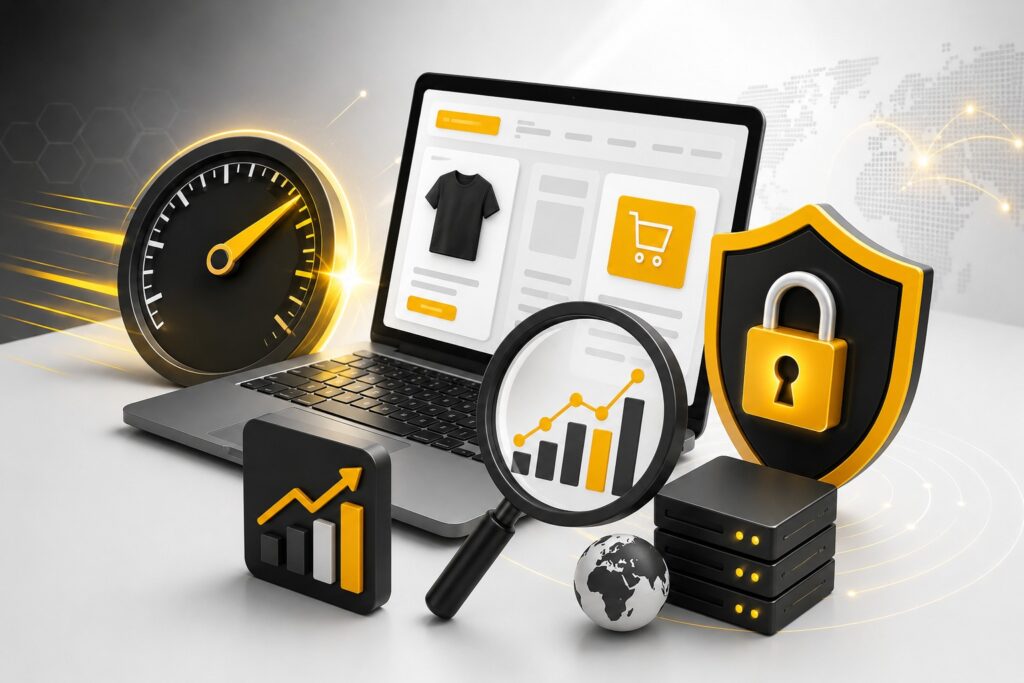
A reliable ecommerce website development company in India should provide a transparent project process covering discovery, planning, design, development, testing, content migration and deployment. Each stage should include clear responsibilities, deliverables and approval points. This structure keeps the project organised and reduces miscommunication.
Request a detailed quotation instead of selecting the lowest estimate. The proposal should explain platform costs, custom development, integrations, hosting, licences, testing, content entry and ongoing maintenance. An unusually low quotation may exclude important requirements that later appear as additional charges. Evaluate the overall value, technical quality and expected business impact rather than comparing price alone.
Post-launch support is another critical selection factor. Ecommerce stores require updates, security checks, bug resolution, product changes and performance monitoring after deployment. Confirm whether the agency offers website maintenance services, technical support, staff training and service-level commitments. A dependable support structure helps protect your investment and maintain a consistent customer experience.
Select a Growth Partner, Not Just a Coding Vendor
Building an online store is only the beginning of ecommerce growth. After launch, your business must attract the right audience, improve search visibility, nurture potential customers and encourage repeat purchases. A company that only provides coding may leave you dependent on several disconnected service providers.
Consider partnering with an agency that offers ecommerce SEO, content marketing, social media marketing, Google Ads management, performance marketing and marketing automation alongside development. When development and marketing teams work together, landing pages, product content, analytics and campaign tracking can be planned as part of one connected growth ecosystem.
The best partner will continuously review user behaviour, traffic sources, abandoned checkouts, product performance and conversion opportunities. It should recommend practical improvements after launch instead of treating the website as a completed one-time project. Choosing a full-service digital marketing agency in India with ecommerce expertise can provide stronger coordination, faster optimisation and more sustainable digital growth.
Build a High-Performing Ecommerce Store With Ace360degree
Ready to turn your ecommerce idea into a fast, scalable and conversion-focused online store? Ace360degree delivers custom ecommerce development, UI/UX design, payment integrations, ecommerce SEO, automation and ongoing growth support for ambitious brands across India. From planning and development to launch, optimisation and customer acquisition, our team builds digital commerce experiences designed to attract customers, simplify purchases and support long-term expansion. Speak with our ecommerce specialists today:
📞 +91 7045 360 360 | 📧 growth@a360pl.com | 🌐 www.ace360degree.com
FAQ’s:-
Q1. How do I choose the best ecommerce website development company in India?
A1. Review the company’s portfolio, technical expertise, ecommerce platforms, client case studies, development process, pricing transparency and post-launch support.
Q2. Which platform is best for developing an ecommerce website?
A2. Shopify, WooCommerce, Magento and custom platforms are suitable for different requirements. The best choice depends on your products, integrations, budget and growth plans.
Q3. How long does ecommerce website development take?
A3. A standard ecommerce website may take several weeks, while custom stores with complex integrations, large catalogues or marketplace functionality generally require more time.
Q4. Does an ecommerce development company also provide SEO services?
A4. A full-service agency can provide technical SEO, ecommerce SEO, content optimisation and digital marketing services alongside website development.